
Plan Your Hunt · Cabin packing
CABIN
PACKING LIST.
What is waiting at camp and what your group needs to bring.
Your cabin list
PACK FOR
YOUR CAMP.
Start with the equipment already waiting at camp. Then use the shared safety, hunting, fishing and food lists below to plan what your group will bring.
Wesley's provides
- Equipped cabin with beds or mattresses
- Basic cookware, dishes and cooking utensils
- Refrigeration and basic power
- Boats, outboard motors, paddles and fuel
- Camp communication equipment
You bring
- Life jackets for every guest
- First-aid kit
- Sleeping bags or linens and pillows as confirmed
- Towels and washcloths
- Food and personal supplies
- Dish soap, cloths, paper products and cleanup supplies
01
Every group
Required safety and personal basics
+
Bring
- Properly fitted life jacket for each person
- Group first-aid kit
- Prescription medication and personal medicines
- Sleeping bag or bedding, plus towels and washcloths
- Food, drinking-water plan and personal beverages
- Rain gear, layered clothing, warm hat and gloves
- Rubber or waterproof boots and camp footwear
- Toiletries, insect repellent, unscented sunscreen and lip balm
- Flashlights or headlamps with spare batteries
- Navigation tools, offline maps, compass and whistle
- Licences, identification, travel documents and emergency contacts
- Charged iPhone 14 or later with iOS 18 or later and an active SIM, if available, plus a power bank or charging cable for satellite texting
Important: Seat-cushion PFDs are supplied at camp for comfort and supplemental flotation. They do not replace the life jackets every guest must bring.
01ASatellite communication for your hunting partySet up and practise before fly-in+
We strongly recommend that hunters with compatible iPhones set up Messages via satellite. In remote camp, two hunters who are both outside cell and Wi-Fi coverage can exchange individual texts through Apple's satellite service. Use it to tell the party when a moose is down or a tag has been filled, coordinate recovery, or report a boat or motor problem. Hunters can also text loved ones at home.
- Each participating hunter needs an iPhone 14 or later, iOS 18 or later, an active SIM and iMessage turned on before leaving coverage. Save party members as contacts and exchange an iMessage before the trip.
- At home, try Settings → Apps → Messages → Satellite Connection Demo. Turning off cellular and Wi-Fi while still in a covered area does not provide a real satellite messaging test; live use requires an actual area without coverage.
- At camp, open Messages and follow the connection prompts outdoors with a clear view of the sky and horizon. Send individual text messages; allow extra time for delivery. Heavy trees or terrain can block the connection. Photos, voice messages and group chats are not supported over Apple's satellite messaging.
- Carry a charged phone and backup power. Agree on a group plan for reporting harvests and filled tags, and follow all applicable tag and reporting rules. Use the supplied Garmin inReach for outfitter and aircraft coordination; use Emergency SOS via satellite or inReach SOS for emergencies.
Apple's Messages via satellite instructions
Optional camp internet: A guest-supplied Starlink Mini can provide Wi-Fi for phones at camp when powered and set up with a clear view of the sky. It is useful for contacting home and sharing information, but it is a separate rental or purchase and is not the same as phone-to-phone satellite texting in the field. Confirm service, power requirements, delivery and return arrangements with the rental provider before your trip. Explore Starlink Mini rental in Canada.
04
Hunting gear
Field, harvest and meat-care equipment
+
Hunt
- Legal solid hunter-orange headwear and outer garment
- Firearm or bow, legal case and ammunition
- Binoculars, calls and day pack
- Waterproof boots; hip waders where useful
- Waterproof flashlight or headlamp and spare batteries
- GPS or offline navigation plus compass
Harvest
- Sharp hunting knives and sharpener
- Four to five large game bags per moose
- Strong rope for positioning and hanging
- Coolers and a plan for the drive home
- Measuring tape, tags and transport documents
- Work gloves and cleanup supplies
05
Fishing gear
A simple walleye and pike setup
+
Rod and tackle
- Medium-light spinning rod and reel
- Approximately 8-pound line
- ¼-, ⅜- and ½-ounce jig heads
- Bright jig colours such as chartreuse, orange, pink or yellow
- Three-inch minnow-style soft baits and curly-tail grubs
- Leaders and a few pike-capable lures
Boat and shore
- Landing net
- Tackle box and pliers
- Fillet knife and sharpener
- Life jacket for each angler
- Rain gear and waterproof footwear
- Fishing licence and current regulations
06
Food & camp supplies
Plan as one group, not six individuals
+
Kitchen plan
- Meals for the full nine-day trip plus weather-delay margin
- Extra food for two or three days of aircraft delay
- Salt, pepper, cooking oil and preferred condiments
- Coffee, tea and breakfast supplies
- Foil, resealable bags and food-storage containers
- Paper towel, napkins and garbage bags
- Dish soap, cloths, scrub pads and drying towels
Pack efficiently
- Assign shared items to named people
- Remove unnecessary retail packaging
- Use compact, stackable containers
- Separate one travel-day meal from camp food
- Label coolers and totes by owner and purpose
- Confirm drinking-water instructions before departure
Sioux Lookout groceries: Fresh Market Foods, 79 Queen Street, lists Sunday hours of 9 a.m.–6 p.m. and Monday–Saturday hours of 8 a.m.–8 p.m. Checked September 21, 2026; confirm holiday changes before travelling. Call 807-737-1630 or check the store’s current hours. Ask about boxing groceries and ice availability. Refrigerated items may need to be moved from boxes into coolers for the overnight stay.
Wesley’s walleye setup: what to pack and how to start
Our packing recommendation starts with a sensitive, two-piece spinning rod, a 2500-size spinning reel and clear 8-pound monofilament. You want to feel the jig reach the bottom. A two-piece rod is easier to pack for the floatplane.
- Pack jig heads in ¼-, ⅜- and ½-ounce sizes. Bright pink/yellow, chartreuse/orange and chartreuse/lime are favourites.
- Bring 3-inch soft-plastic minnows in smelt or pearl white, and 3-inch curly-tail grubs in white or chartreuse/orange.
- Lower the jig until it touches bottom, lift it a few inches and let it fall again. Vary the pause and retrieve to find what is working.
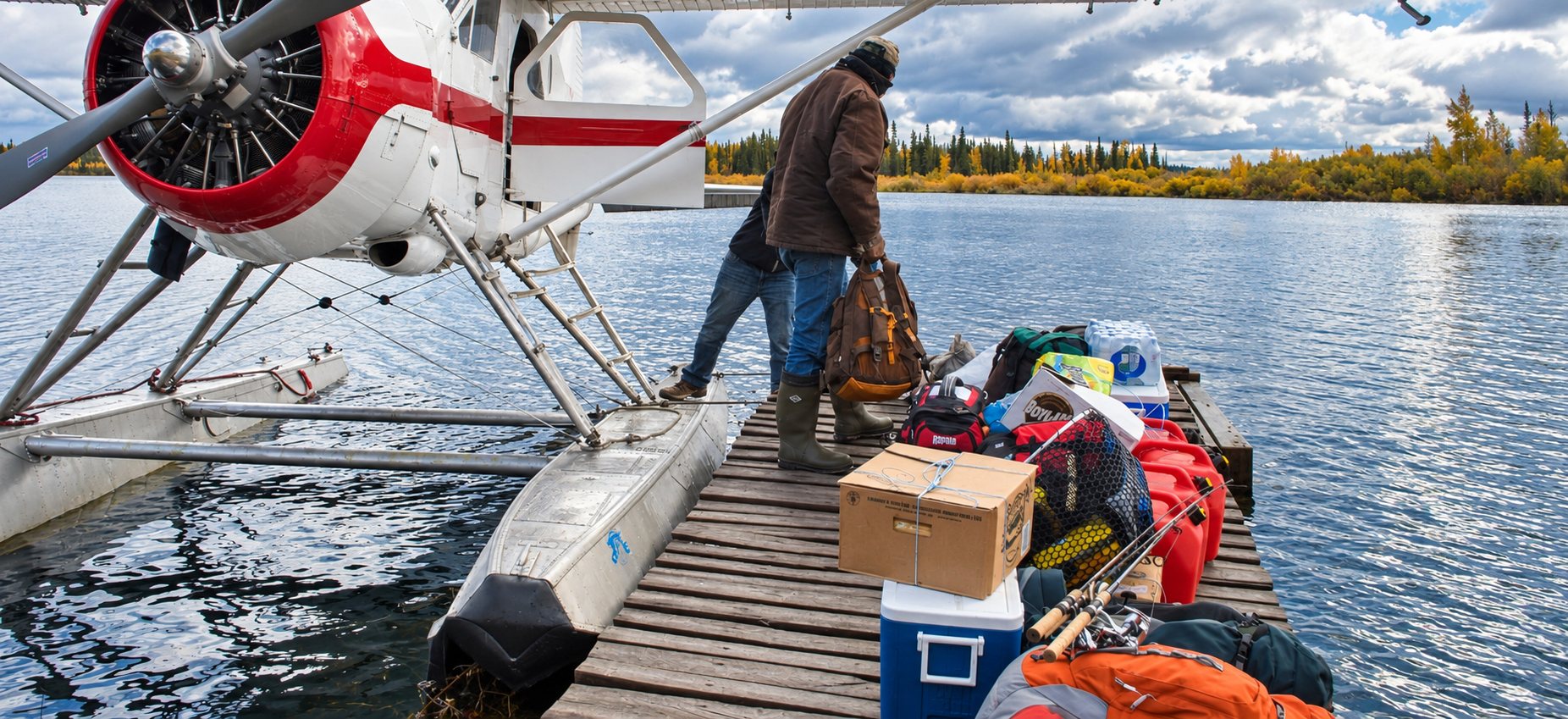
- Use a landing net rather than lifting a fish with the rod tip. Remove hooks from rods before aircraft loading.
These are Wesley’s practical starting recommendations, adapted from our fishing packing document. The original product prices are not current quotes. Check current fishing rules, limits and any water-specific restrictions before fishing. For a dedicated northern-pike setup, ask us before shopping; this light walleye setup is not a complete pike-tackle list.
Aircraft weight and packing tips → · Cabin guide and camp tips →