By a non-Ontario resident guest
These are one hunter's reflections, not a guarantee or a substitute for current regulations, safe judgment and the conditions in front of you.
I have hunted moose twice with Charles. As I prepare for my third trip, I keep returning to a handful of lessons he repeated until they became part of how I see the bush.
Moose favour ridges
Charles must have said this a hundred times: moose like good ground beneath their feet. They use firm, elevated ridges as natural travel routes. On a map, a ridge may look like one feature among many; on the ground, it can be the line that organizes the whole hunt.
Water creates opportunity
Moose need water, and they often show themselves along the shore in the early morning and evening. When we found fresh sign near a likely drinking area, the shoreline gave us a place to watch, listen and call—and, if everything came together, a much more manageable recovery route.
Fresh sign beats a favourite spot
An old track only proves a moose was there once. Charles taught me to keep moving until the sign was current: newly browsed branches, fresh tracks, disturbed ground or other recent evidence. I think of it like fishing. You cannot keep returning to a favourite hole and assume the fish are still there. Find where the activity is now, then slow down and hunt that place properly.
The call matters
A good location does not replace a good call. Learn the sounds, learn when to use them and practise before the trip. The goal is not to make noise; it is to sound convincing enough that a moose commits to investigating.
Always account for the wind
A moose has an extraordinary nose and remarkable hearing. Wind carries both scent and sound. A bull may circle downwind to test what it hears before revealing itself, so every setup needs an answer to the same question: if he tries to get our wind, where will he go?
Slow down enough to notice
Charles never seems rushed in the bush. He paddles, drifts and watches. He notices a nipped branch, a small break in the brush, disturbed ground, a faint sound and the behaviour of other animals. That patience changed my idea of what productive hunting looks like. Moving faster is not the same as learning more.
The hunt is larger than the harvest
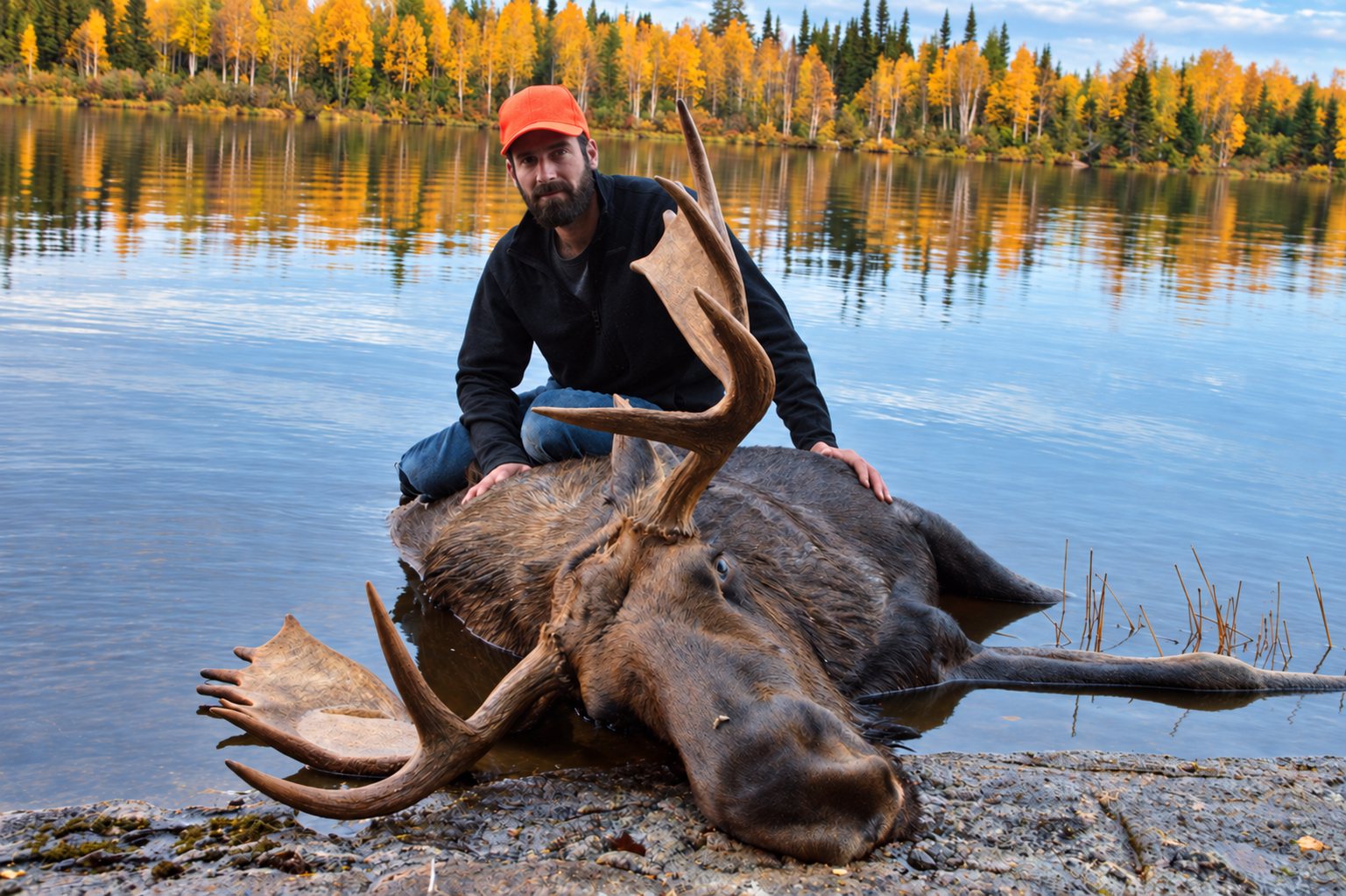
Of course, the best ending is a big bull moose. But a hunt can still be meaningful, difficult and deeply enjoyable when that does not happen. Charles taught me to respect the whole process: the work, the bush, the people beside me and the gift of an opportunity. When a moose is harvested, I receive it with gratitude to God and recognition that the outcome was never mine to command.
Preparation puts you in the right stretch of bush. Patience helps you understand it. The harvest remains a gift.