Count every item
Confirm rods, coolers, personal bags, food, motors and shared equipment before the aircraft departs.
 WESLEY'SFLY-IN OUTPOSTS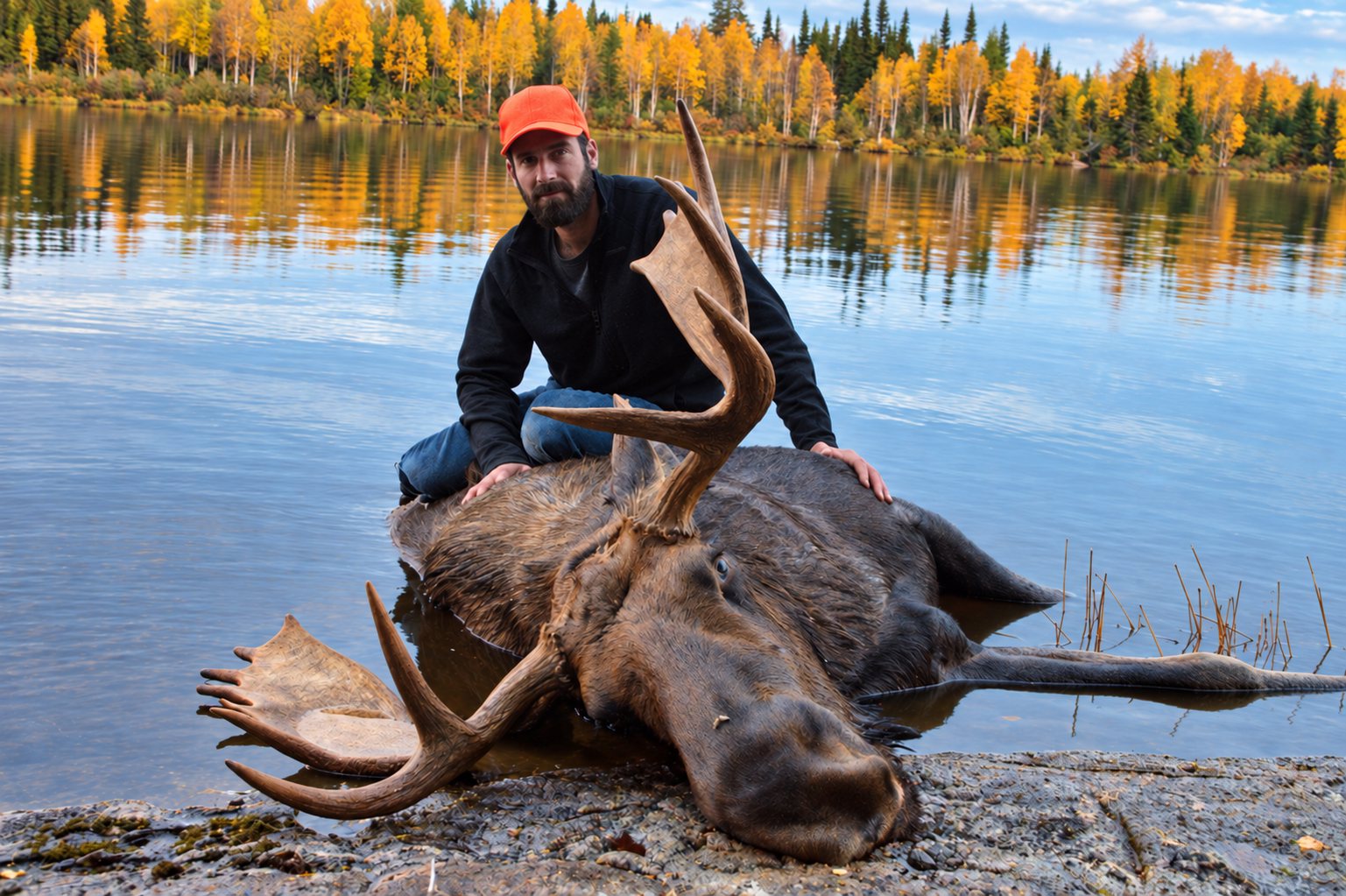
The field guide
A careful first hour, a clean camp and a deliberate hunt make the week safer and better.
Your first hour
A departing party may be boarding the aircraft that brought you in. Keep incoming and outgoing gear in separate piles, identify your bags before the plane leaves and locate the camp Garmin inReach immediately.
Clearly mark every item with coloured tape and your party name. Remove exposed fishing hooks before aircraft loading so pilots and ground crew are not injured. If low water requires hip or chest waders for your location, Wesley's will tell your group before departure.
Confirm rods, coolers, personal bags, food, motors and shared equipment before the aircraft departs.
Find the inReach, verify charge and review check-ins, non-urgent messaging and SOS use.
Review fuel, boats, motors, generator, water, stove, chainsaw and camp-specific instructions.
Secure food and trash immediately. Do not leave fish remains or food waste near camp.
Fuel discipline
Wesley's supplies straight gasoline. Generators use straight gas. Chainsaws use mixed gas. A personal two-stroke outboard requires oil mixed at the engine manufacturer's specified ratio; for the common camp setup, use 50:1 only when that is the motor's required ratio.
Keep straight gas clearly labelled and separate from mixed fuel. Never add two-stroke oil directly to a container unless the entire container is being dedicated and labelled for that mixture.
Two-stroke oil may tint the fuel and can leave an oily residue after a small sample evaporates, but colour, smell and residue are not definitive tests. Labels and known handling history are the reliable identifiers.
Do not put uncertain fuel into an engine. Set it aside, mark it “unknown,” contact Wesley's on the inReach and use a clearly identified container instead.
On the water
Two hunters per boat is ideal—one forward and one aft. Three may be possible only when the boat's capacity, the load and conditions allow it. Every person must wear the properly fitted life jacket they brought.
Camp systems
Remote equipment is dependable only when everyone treats it deliberately. Slow down around engines, axes, chainsaws, stoves, docks and water.
Store food and trash securely. Clean fish away from sleeping areas and dispose of remains as directed—never beside camp. The only serious bear problem Wesley's has experienced followed fish remains left in the tent area.
Run the generator morning and evening to maintain the refrigerator and freezer. While it runs, charge the water-pump batteries. Cloudy fall weather, freezing temperatures and damaged shoreline lines can interrupt running water.
Use only the provided toilet paper and bulking material exactly as the camp instructions direct. Keep excess liquid, wipes, sanitary products, trash and chemicals out. Close the lid, keep the vent unobstructed and report problems—do not improvise repairs.
Remote-bush rule
Chainsaw injuries, burns, cuts and falls are more serious when the nearest road and hospital are a flight away. Wear proper protective equipment, work with a partner, maintain stable footing and stop when tired, rushed or unsure.
Never leave a fire, stove or anything cooking unattended. Check Ontario's current forest-fire and Restricted Fire Zone information before lighting an outdoor fire.
Wesley’s monitors summer fire activity while preparing camps. Fall travel still depends on actual conditions: the month alone is not a guarantee of clear skies or safe access.
NASA FIRMS satellite fire map helps you view detected hotspots. It is not permission to light a fire, an evacuation map or a substitute for local instructions. Use Ontario’s current fire information for restrictions, and confirm conditions with Wesley’s and Pickle Lake Airways before departure.
Hunt deliberately
Hunt early and again through the late afternoon. Look for firm ridges, fresh sign and shorelines where moose drink. Keep moving until the sign is current, then call with the wind in mind. Moose hear and smell exceptionally well.
Essential legal checklist
This is a reminder—not the law itself. Every hunter is responsible for the current Ontario Hunting Regulations Summary and all firearms, boating and tag requirements.
Wear the required solid hunter-orange garment and head covering during the applicable gun season. Confirm current specifications in the regulations.
Know when a firearm is legally loaded, how it must be transported and stored, and the restrictions on discharging from watercraft. Do not rely on camp conversation for the rule.
Carry the licence summary and the tag or registered-guest documentation that applies. Conservation officers can and do check remote camps.
For a life-threatening emergency, activate the Garmin inReach SOS and follow the response team's instructions. Then contact Wesley's through the provided emergency number or inReach when possible. For a non-life-threatening problem, message Wesley's first so a safe aircraft and care plan can be coordinated.
Guests are responsible for medical evacuation and other extra flight costs. Travel insurance that includes emergency medical evacuation is strongly recommended. There is no cellular service at camp; satellite text, the inReach or a guest-supplied Starlink Mini are the realistic options.
When a moose is down
The ideal harvest is at the shoreline, where the moose can be field dressed, quartered and loaded into a boat. Do not take a shot in terrain your group cannot safely recover from—especially late in the hunt.
Before pickup
Weather and aircraft timing can be uncertain, but camp cleanup cannot wait. Finish early, stage the load and be ready when the aircraft arrives.
Wash and put away camp gear, remove food and fish remains, and carry every piece of trash out on the plane.
Pull boats up, tie them securely to a tree or approved anchor and remove the plugs so rainwater drains.
Charge the inReach and leave it in its designated, easy-to-find location for the arriving party.
Leave two to three days of margin after the trip, carry extra food for weather delays and choose flexible commercial flights. Remote floatplanes cannot fly safely in every condition.